
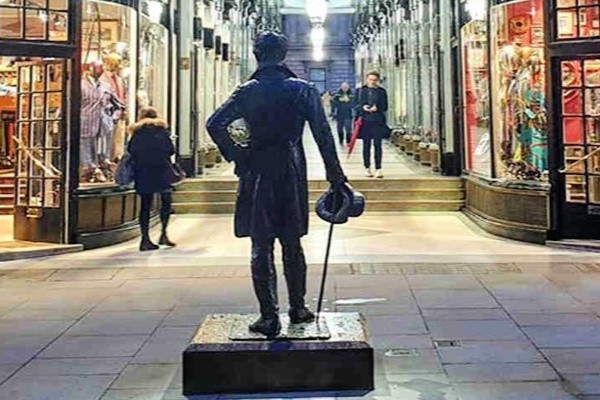
TALES OF MY CITY: BEAU BRUMMELL’S LONDON
Beau Brummell didn’t invent the suit. He made it a weapon. In the 1810s, this tailor’s son talked his way into the Prince Regent’s inner circle, then built a code of dress so sharp it still dictates how men wear trousers today. This walking route hits the five streets where Brummell lived, dressed, gambled, and eventually fled his creditors. No ghost tours. No wax figures. Just the actual pavements he walked.
I mapped this route on a Tuesday in October 2026. Total distance: 2.1 miles. Time: 3–4 hours if you stop for coffee and a tailor visit. Cost for the walk itself: £0. Cost for a decent shirt from one of the Jermyn Street makers: £95–£220.
Why Brummell Still Matters — The Economics of Personal Presentation
Brummell proved that a man could rise on grooming alone. Before him, aristocratic men wore lace, bright silks, and powdered wigs. After him, they wore plain dark coats, starched linen, and perfectly tied cravats. Brummell’s innovation wasn’t a garment. It was the idea that cleanliness and restraint signaled status more loudly than gold thread.
He spent roughly £300 a year on laundry alone — about £30,000 in 2026 money. His boots were polished with champagne. His razors cost a guinea each. The man understood that visible effortlessness requires invisible expense.
For the modern traveler, Brummell’s London offers a practical lesson: the places where he spent money still exist. You can stand in the same tailor shops, drink in the same club bars, and walk the same street where he was cut dead by the Prince Regent in 1813. That’s real history you can touch.
Skip the tourist traps around Buckingham Palace. This walk is for anyone who wants to understand how a man with no title and no fortune used a clean collar to change the world.
Stop 1: Brooks’s Club — Where Brummell Gambled Away His Future
Start at 60 St James’s Street, SW1A 1LN. Brooks’s is a private members’ club founded in 1764. Brummell joined in 1794. He played faro and whist here, often losing £500–£1,000 a night — roughly £50,000–£100,000 today. By 1816 he owed £800 to the club alone.
What you see now: A five-storey Georgian brick building with a black door. No sign. No plaque mentioning Brummell. The club still operates. You cannot enter unless you’re a member or a guest of one. But stand across the street and look at the first-floor windows. That’s the bow window room where Brummell held court.
Cost: Free to view. Membership at Brooks’s runs roughly £2,500–£4,000 annually with a joining fee of £1,500–£3,000. Not for the casual visitor.
Practical tip: The pavement is narrow. Stand near the lamppost at the corner of St James’s Street and Park Place. You get a clear view without blocking club members. Photograph the door quickly — the doorman will ask you to move if you linger.
What Brummell Actually Did Here
He didn’t just gamble. He used the club’s dining room to stage his daily entrance. Brummell would arrive at 5 PM, walk slowly through the room, and let people watch his cravat. He spent 20 minutes tying it each morning. The knot had to look accidental. That performance — the appearance of effortless perfection — was his real product.
Stop 2: White’s Club — The Bay Window Where He Was Judged
Walk 90 seconds north on St James’s Street. White’s is at number 37–38. Founded in 1693, it’s the oldest gentlemen’s club in London. Brummell was blackballed from White’s twice before being admitted. Once inside, he sat in the front bay window — the same window where the Prince Regent snubbed him in 1813.
Why this matters: The snub was public. Brummell was standing in the window. The Prince walked in, looked at him, turned around, and walked out. Everyone saw it. Brummell’s social capital evaporated in about four seconds. He fled to France three years later to escape debtors’ prison.
What you see now: A cream-stucco building with a bow window on the ground floor. A small plaque says “White’s Club.” The window has net curtains. You can’t see inside. That’s fine — the drama happened on the pavement.
Cost: Free. White’s membership: roughly £3,500–£5,000 annually, with a £2,000–£4,000 joining fee. Waitlist: 5–10 years.
Stop 3: Jermyn Street — Where Brummell Bought His Linen
Turn left onto Jermyn Street. This is the epicenter of men’s shirtmaking. Brummell ordered his shirts here, and the street still houses the same type of makers he used. You can walk into any of these shops and buy a shirt made to the same standard he demanded.
Three shops worth your time:
- Turnbull & Asser (71–72 Jermyn Street). Brummell’s contemporary equivalent. A ready-to-wear shirt starts at £195. Made-to-measure: £325–£450. They have a small museum case with Winston Churchill’s collar measurements.
- Harvie & Hudson (77 Jermyn Street). More affordable. Ready-to-wear shirts from £95. The staff will measure you for free even if you don’t buy. Good option if you want a Jermyn Street shirt without the £200 price tag.
- New & Lingwood (53 Jermyn Street). They supplied Eton College. A shirt costs £145–£180. They also sell cravats and collar studs — the exact accessories Brummell wore.
What Brummell bought: He insisted on Irish linen, starched to a specific stiffness. He changed his shirt three times a day. Each shirt cost about 15 shillings — roughly £75 today. He owned 40 at a time.
Bottom line: If you want a souvenir that Brummell would recognize, buy a white poplin shirt from Turnbull & Asser. Skip the tie. He didn’t wear them.
| Shop | Address | Shirt Price Range | Brummell Connection |
|---|---|---|---|
| Turnbull & Asser | 71–72 Jermyn Street | £195–£450 | Direct lineage of bespoke shirtmaking |
| Harvie & Hudson | 77 Jermyn Street | £95–£150 | Same street, same era of craftsmanship |
| New & Lingwood | 53 Jermyn Street | £145–£180 | Sells cravats and collar studs |
Stop 4: Savile Row — The Tailoring Street Brummell Made Famous
Walk north from Jermyn Street to Savile Row (about 5 minutes via Burlington Arcade). Brummell didn’t have his coats made here — he used a tailor named Weston who worked near Bond Street. But Savile Row is where Brummell’s aesthetic became a global standard.
What Brummell’s coat looked like: Dark blue or black. No embroidery. No velvet. No gold buttons. Fitted close to the body. The collar sat high against the neck. The cut was severe and simple. He removed every decorative element that didn’t serve structure.
Modern Savile Row prices:
- Gieves & Hawkes (1 Savile Row): Two-piece suit from £2,800. Bespoke from £4,500.
- H. Huntsman & Sons (11 Savile Row): Suit from £3,500. Known for the sharp, military-influenced cut Brummell would have approved of.
- Henry Poole & Co (15 Savile Row): The oldest tailoring house on the Row. Suits from £3,000. They made the first dinner jacket in 1865.
For the budget traveler: You don’t need a bespoke suit. Walk into the Gieves & Hawkes ready-to-wear shop at 1 Savile Row. Try on a blazer. Feel the canvas construction. That’s the Brummell experience for £0.
Stop 5: The Albany — Where Brummell Lived (and Left Quickly)
Walk to 1 Savile Row, then turn onto Vigo Street. The Albany is the large cream-stucco residential building on your right. Brummell lived in a set of rooms here from 1811 to 1814. Rent was £120 a year — about £12,000 today.
He left when the bailiffs arrived. In 1814, he owed £2,500 to various creditors. He slipped out the back gate, took a carriage to Dover, and never set foot in London again. He died in Caen, France, in 1840, impoverished and possibly syphilitic.
What you see now: A gated courtyard. The building is divided into private apartments. You cannot enter. But the gate is iron and you can see the courtyard from the street. The porter will not stop you looking for 30 seconds.
Cost: Free. An apartment in the Albany today sells for £1.5–£3 million. Rent: roughly £40,000–£60,000 per year.
The Lesson of the Albany
Brummell’s life is a financial caution as much as a style story. He earned no income. He borrowed from tailors, clubs, and friends. When the loans stopped, he was done. His entire empire was credit with no collateral. Modern travelers can admire his taste without replicating his budget.
Common Mistakes on This Walk — What to Skip
Mistake 1: Trying to enter the clubs. You will be turned away. Don’t embarrass yourself. The history is on the street, not inside the building.
Mistake 2: Expecting Brummell-themed souvenirs. There are none. No T-shirts. No postcards. No museum. The street is the artifact.
Mistake 3: Rushing. This walk takes 15 minutes if you just trace the route. The value is in stopping, looking at the buildings, and understanding what happened there. Stand at White’s window for a full 60 seconds. Imagine the Prince walking past.
Mistake 4: Visiting on a Sunday. Tailor shops on Jermyn Street and Savile Row close Sunday and most of Monday. Tuesday–Saturday, 10 AM–6 PM is the window.
Mistake 5: Assuming Brummell was a fashion designer. He wasn’t. He never made a garment. He was a consumer who set standards. You learn more from his spending habits than his wardrobe.
When This Walk Won’t Work for You
This route is for people who want physical history — the actual streets where a historical figure operated. If you prefer interpretive plaques, audio guides, or costumed reenactors, go to the Museum of London (free, has a Regency section) or Dover Street Market (fashion-forward, not historical).
If you’re traveling with children under 12, skip this. There’s nothing interactive. The walk is essentially looking at the outsides of buildings and reading plaques. Teens interested in fashion history will find it compelling. Younger kids will be bored in 10 minutes.
If you’re on a tight schedule, combine this with a visit to Fortnum & Mason (181 Piccadilly, 3 minutes from Jermyn Street) for a Regency-era grocery experience. Their tea counter has operated since 1707.
Alternative walk: If Brummell isn’t your figure, the Dr Johnson’s House (17 Gough Square, EC4A 3DE) offers an 18th-century literary London walk for £7.50 entry. Different era, same streets.
Summary — The Route at a Glance
| Stop | Location | Time Needed | Cost | Key Detail |
|---|---|---|---|---|
| Brooks’s Club | 60 St James’s Street | 10 min | Free | Bow window where Brummell gambled |
| White’s Club | 37–38 St James’s Street | 10 min | Free | Bay window where Prince snubbed him |
| Jermyn Street | Jermyn Street SW1 | 30–45 min | £0–£450 | Shirt shops Brummell used |
| Savile Row | Savile Row W1 | 20 min | £0 | Tailoring street his style inspired |
| The Albany | Vigo Street W1 | 10 min | Free | His last London residence |
Total walking distance: 2.1 miles. Total time with stops: 3–4 hours. Total cost for the walk: £0. Cost if you buy a shirt: £95–£450. Best day: Tuesday–Saturday, starting at 10 AM.
Brummell’s London is still there. The buildings haven’t moved. The tailors still cut cloth on the same streets. You don’t need a ticket or a guide. You just need to walk slowly and think about what a well-tied cravat can do.

Leave a Reply