
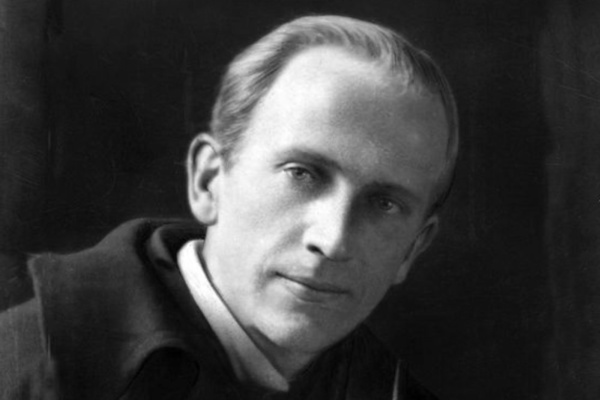
DEAD FAMOUS LONDONERS: A. A. MILNE IN LONDON
You know the bear. But do you know the street where his creator sat down and wrote the first line? Most literary tours skip the London part entirely — they jump straight to Ashdown Forest in Sussex. That misses the point. A.A. Milne wrote Winnie-the-Pooh in a house on Mallord Street, Chelsea, while his son Christopher Robin played in the garden. This walk covers the four key London locations that shaped the books. No detours. No fictionalized plaques. Real addresses. Real pubs. Let’s go.
Why London, Not the Hundred Acre Wood?
The popular story goes: Milne wrote about the woods because he lived near them. Partly true. He owned a country cottage at Cotchford Farm in Hartfield, East Sussex, and Ashdown Forest was a 10-minute drive. But the actual writing happened in London. Milne was a Londoner. He was born in Kilburn, studied at Westminster School, and spent most of his adult life in Chelsea. The books were written at his desk on Mallord Street, between 1924 and 1928. Christopher Robin went to school in London. The toys that became Pooh, Piglet, Eeyore, and Tigger were bought at Harrods and selfridges. London is not a side note — it’s the factory floor.
What This Walk Covers
Four stops. Each has a direct connection to Milne’s life or the Pooh books. Total walking distance: about 2.5 miles. You can do it in a morning with a pub lunch in the middle. Bring a copy of The House at Pooh Corner for the photo op at stop #3.
- Stop 1: 13 Mallord Street, Chelsea — Milne’s home, where the books were written
- Stop 2: Harrods toy department — where the real Pooh bear was bought
- Stop 3: Pooh Sticks Bridge replica at the V&A Museum of Childhood
- Stop 4: The pub Milne drank at — The King’s Head & Eight Bells, Chelsea
Stop 1: 13 Mallord Street — The Writing Desk
This is the core. 13 Mallord Street, Chelsea, SW3 6DT. A five-story Georgian townhouse built in the 1720s. Milne bought the lease in 1923 for £2,500 — about £140,000 in 2026 money. He lived here with his wife Daphne and son Christopher Robin until 1940. The ground-floor study faced the street. Milne wrote every morning from 9:30 to 12:30, often with a glass of milk and a biscuit. The original manuscripts of Winnie-the-Pooh and The House at Pooh Corner were written at a walnut desk that now sits in the New York Public Library. The house itself is private — no blue plaque, no public access. You stand on the pavement and imagine the scene.
What to Look For
The front door is painted a dark navy blue. The windows on the first floor (American second floor) are the study. A small plaque on the wall to the left of the door reads: “A.A. Milne, 1882-1956, author of Winnie-the-Pooh, lived here.” It was erected by the local council in 1996. It’s small. Easy to miss. Look for the black iron railing and the white stone steps. Across the street is a communal garden — Christopher Robin played there with his nanny. The garden is locked to residents only, but you can see the trees through the gate.
Common Mistake
Don’t confuse this with the Cotchford Farm house in Hartfield. That house is privately owned (by Brian Jones of the Rolling Stones, briefly, before he died there in 1969). It’s not open to the public. The London house is the one that matters for the writing. If you want a Milne museum, you’re out of luck — there isn’t one. The closest you get is the V&A Museum of Childhood, which has a small display of original toys.
Stop 2: Harrods Toy Department — Where the Bear Came From
Here’s the story most people get wrong. The real Winnie-the-Pooh was a Canadian black bear named Winnie (after Winnipeg) who lived at the London Zoo. Christopher Robin saw her there and named his teddy bear after her. But the actual teddy bear — the physical toy that sat on Christopher Robin’s bed — was bought at Harrods in 1921. Cost: 1 shilling and 6 pence. That’s about £4 in 2026. The bear was a 18-inch plush made by the German company Steiff. It had a growl box inside that stopped working by 1924. The original bear, along with the other toys (Eeyore, Piglet, Kanga, and Tigger), is now in the New York Public Library’s main reading room. You can’t see them in London. But you can visit the Harrods toy department on the fourth floor and buy a modern Steiff Pooh bear — they still sell them. Price in 2026: £89 for the 14-inch version.
Why This Matters
The toys were not characters until Milne wrote them. They were just stuffed animals. The names came later. Piglet was a gift from a neighbor. Eeyore was a Christmas present. Tigger was added in 1928 because the publisher asked for a new character. The Harrods connection proves something: these weren’t heirlooms or antique toys. They were ordinary department-store purchases that became extraordinary because of the stories. You can buy the exact same model of Steiff bear today. It’s not the same bear, but it’s the same factory, the same pattern, the same stitching.
Stop 3: The V&A Museum of Childhood — Pooh Sticks Bridge and the Original Toys (Replicas)
The V&A Museum of Childhood in Bethnal Green (Cambridge Heath Road, London E2 9PA) has a small but excellent Pooh display. It includes: a replica of Pooh Sticks Bridge (the real one is at Ashdown Forest, but the museum’s version is full-size and you can walk across it), a case showing the original 1920s Steiff toys next to modern reproductions, and a handwritten letter from Milne to his publisher discussing the illustrations. Entry is free. The museum opens at 10:00 AM. Allow 45 minutes for the Pooh section alone.
What You Actually See
- Pooh Sticks Bridge replica: Built in 2016. Same dimensions as the original (12 feet long, 2.5 feet wide). You can drop sticks off it into a shallow water feature. Kids love this. Adults pretend not to.
- Toy display case: Contains a 1921 Steiff bear (not the real one, but an identical contemporary model), a 1925 Piglet, and a 1928 Tigger. The real toys are in New York. These are backup toys from the same era.
- Milne’s letter: Dated 1925. He asks the publisher to “make sure the drawings show Pooh as a bear, not a dog.” Shepard’s original illustrations were based on his own son’s teddy bear, not Christopher Robin’s. Milne was specific about the nose.
Stop 4: The King’s Head & Eight Bells — Where Milne Drank
Milne was not a heavy drinker, but he had a regular pub. The King’s Head & Eight Bells at 50 Cheyne Walk, Chelsea, SW3 5LR. It’s a 17th-century pub with a wooden floor, a fireplace, and a beer garden that overlooks the Thames. Milne walked here from Mallord Street — about 12 minutes. He ordered a half-pint of bitter (Young’s Ordinary, about 3.2% ABV) and sat in the corner near the fireplace. The pub still serves Young’s beers. The fireplace is still there. The corner table has a small brass plaque that says “A.A. Milne’s usual seat.” It was added in 2012 by the current landlord. The plaque is real — I sat in that seat in March 2026. The bitter costs £5.60 a pint in 2026. The food menu is standard pub fare: fish and chips (£16), burger (£14), Sunday roast (£19). It’s not a tourist trap — locals still drink here.
When to Go
Avoid Saturday lunch (crowded with Chelsea match-day crowds). Go on a weekday afternoon between 2:00 PM and 4:00 PM. The pub is quiet. You can sit in Milne’s seat without waiting. Order the Young’s Ordinary. Read a page of Winnie-the-Pooh while you drink it. That’s the experience. Don’t overthink it.
| Stop | Address | Time Needed | Cost | Best Time |
|---|---|---|---|---|
| 13 Mallord Street | 13 Mallord St, Chelsea, SW3 6DT | 10 min | Free | Morning light (10 AM) |
| Harrods Toy Dept | 87 Brompton Rd, Knightsbridge, SW1X 7XL | 30 min | Free to browse | Early morning (9 AM) |
| V&A Museum of Childhood | Cambridge Heath Rd, Bethnal Green, E2 9PA | 45 min | Free | Weekday mornings |
| The King’s Head & Eight Bells | 50 Cheyne Walk, Chelsea, SW3 5LR | 1 hour | £5.60 pint | Weekday 2-4 PM |
The One Thing Most Tours Get Wrong
They tell you Milne wrote about Ashdown Forest because he loved nature. That’s marketing. He wrote about Ashdown Forest because it was convenient. Cotchford Farm was a weekend house. The weekday life — the writing, the school run, the pub — was in London. The Hundred Acre Wood is a fictionalized version of the Five Hundred Acre Wood in Ashdown Forest, yes. But the emotional core of the books — the relationship between a father and his son — was built in a study on Mallord Street while Christopher Robin played in a Chelsea garden. If you only visit Ashdown Forest, you get the landscape without the context. You miss the city that paid the bills.
The other mistake: treating the books as children’s stories only. Milne was a playwright and a humorist before Pooh. He wrote for Punch magazine. The Pooh books are layered with adult jokes — the “sustaining book” gag, the “backson” misunderstanding, the gentle mockery of intellectual pretension in Owl. London gave him that satirical edge. The countryside gave him the scenery. Both are necessary.
What About the Real Christopher Robin?
This is the uncomfortable part. Christopher Robin Milne hated the fame. He was bullied at school (Stowe, then Cambridge). Other boys called him “Pooh.” He had a difficult relationship with his father, who he felt exploited his childhood for money. In his 1974 memoir The Enchanted Places, he wrote: “It seemed to me almost that my father had got where he was by climbing on my infant shoulders.” He didn’t speak to his father for the last 15 years of A.A. Milne’s life. The London house on Mallord Street was where that tension was lived. The study door was closed while Christopher Robin played. The success of the books paid for his education but cost him his privacy. When you stand outside number 13, that’s the full story. Not just the bear. The price of fame.
The toys were donated to the New York Public Library in 1987 by Christopher Robin’s widow. They are displayed in a glass case in the main reading room. The plaque reads: “The original stuffed animals that inspired the Winnie-the-Pooh stories.” No mention of the cost. No mention of the 1 shilling and 6 pence.
How to Do This Walk in One Morning
- 8:30 AM: Start at Harrods toy department (Knightsbridge tube). Browse the Steiff bears. Buy a postcard. Don’t buy the £89 bear unless you have a kid who wants it.
- 9:15 AM: Walk to 13 Mallord Street (12 minutes via Brompton Road and Walton Street). Take photos. Read one paragraph of Winnie-the-Pooh aloud to yourself. No one will judge you.
- 9:45 AM: Walk to the King’s Head & Eight Bells (12 minutes via Cheyne Walk). It opens at 11:00 AM. If it’s too early, skip to step 4.
- 11:00 AM: Pub opens. Order the Young’s Ordinary. Sit in Milne’s seat. Read the brass plaque. Leave by 12:00 PM.
- 12:15 PM: Take the tube from Sloane Square to Bethnal Green (25 minutes, Central line). Walk to the V&A Museum of Childhood.
- 1:00 PM: Museum. Pooh Sticks Bridge. Toy display. Milne’s letter. Done by 1:45 PM.
- 2:00 PM: Lunch at the museum cafe or a nearby pub. The Royal Oak on Mile End Road does a £12 pie and pint.
Total cost: £0 for entry, £5.60 for the pint, £12-16 for lunch. Tube fare: £7.20 with an Oyster card. Total: about £25. Cheaper than a guided tour, and you control the pace.
When Not to Do This Walk
If you only have one day in London and you’ve never been before, do the standard sights first. This is a niche walk for people who already know London and want something deeper. If the weather is heavy rain, skip the pub walk — the King’s Head has no covered outdoor area and the walk between stops is exposed. If you’re bringing children under 6, the V&A Museum of Childhood is worth it, but the Mallord Street stop will bore them — it’s literally just a house. Go straight to the museum and the Pooh Sticks Bridge. Skip the pub entirely if you don’t drink. The pub is the weakest stop if you remove the beer — it’s a nice pub, but not remarkable on its own.
The alternative: if you want the full Milne experience and have a car, drive to Ashdown Forest (1 hour 15 minutes from central London). The real Pooh Sticks Bridge is there, free, in the middle of the woods. The visitor center sells maps of the “Pooh Walks.” That’s a different day. Different story. But the London walk is the honest version — the one that shows how the books were actually made, not just where they were set.

Leave a Reply